 See photos and updates from listings directly in your feed
 Share your favorite listings with friends and family
 Save your search and get new listings directly in your mailbox before everybody else
Summary
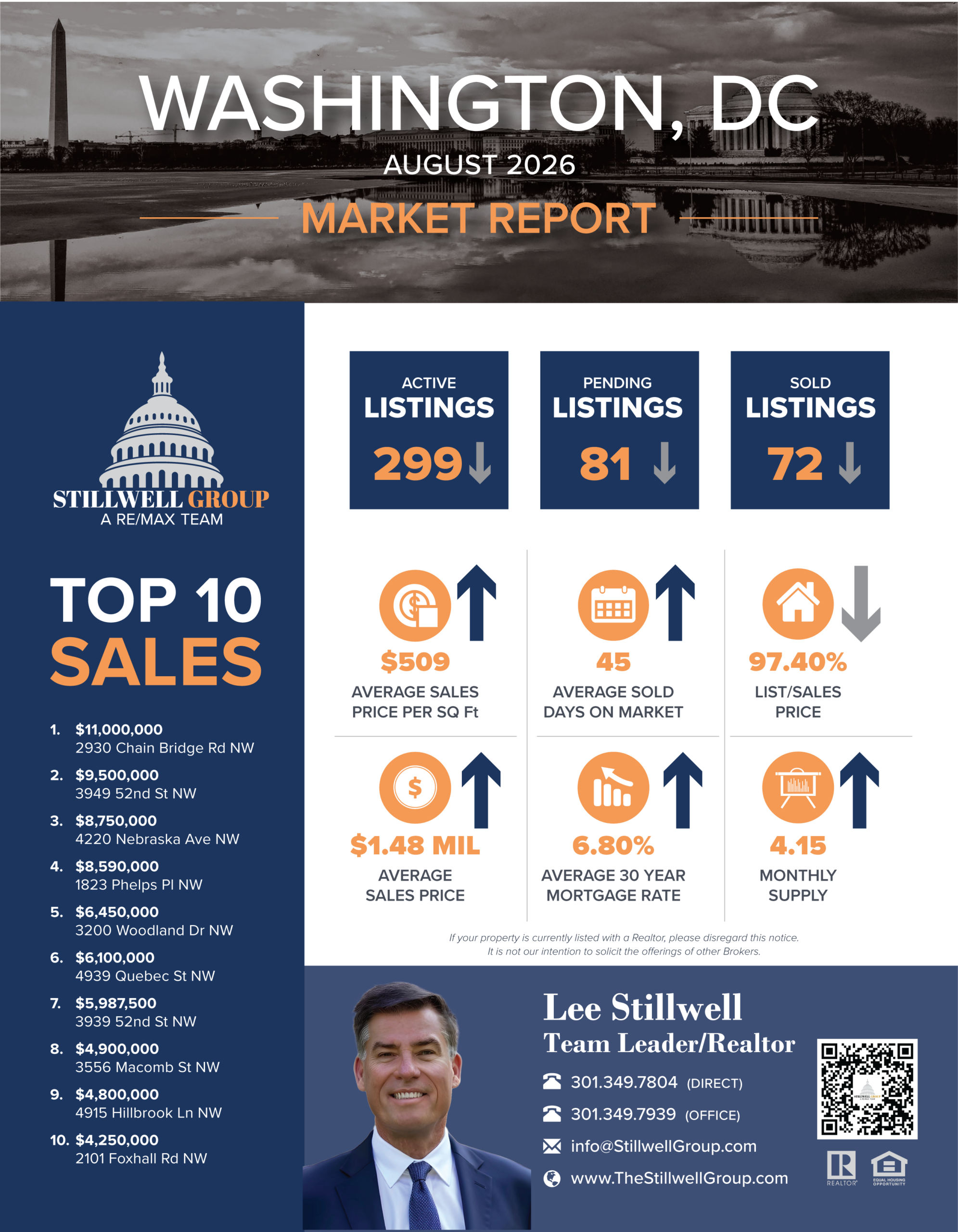
The Washington, DC detached-home market strengthened in August, with home prices rising significantly, overall pending sales increasing, and available inventory declining.
The median sold price reached $1,483,000, up 16.5% from July and an impressive 26.2% compared with August 2025. This year-over-year increase shows continued strength in detached-home values across the District.
Homes did take longer to sell. The average days on market was 45 days, which is 29% higher than the five-year August average of 35 days. This suggests buyers are taking more time to make decisions, even as prices remain strong.
Buyer activity was relatively steady during the month, with 81 new pending contracts, a slight 1.2% decrease from July. However, total pending contracts increased 5.1% to 123, while available inventory dropped 11% to 299 active listings.
The Contract Ratio increased to 0.41 pending sales per active listing, up from 0.35 in July and 0.29 in August 2025. The current ratio is also 5% above the five-year August average of 0.39, indicating stronger contract activity relative to the number of homes available.
What Does This Mean for Buyers and Sellers?
Overall, the numbers indicate that the Washington, DC detached-home market is leaning slightly in favor of sellers. Rising prices, declining inventory, and an improving Contract Ratio are positive signs for homeowners considering selling.
For sellers, properly priced and well-presented homes can benefit from limited inventory and stronger buyer demand. However, the longer average days on market means sellers should still have realistic expectations about how quickly their property may sell.
For buyers, higher prices and reduced inventory can create more competition for desirable properties. At the same time, longer market times may provide negotiating opportunities on homes that have been sitting on the market.
Washington, DC remains a diverse market where conditions can vary significantly by neighborhood and price range, making local pricing, recent comparable sales, and property-specific strategy especially important.


